In 2018, at a Dubai resort next to the blue-green waters of the Persian Gulf, Amin Nasser, CEO of Saudi Aramco, stood before an audience of hundreds of petrochemical executives to set out his vision for the future of the world’s largest oil company. The goals he described weren’t primarily about energy. Instead he announced plans to pour $100 billion into expanding production of plastic and other petrochemicals.
Nasser predicted that with a growing global population wielding more purchasing power every year, petrochemicals—compounds derived from petroleum and other fossil fuels and of which plastics and their ingredients constitute as much as 80 percent—would drive nearly half of oil-demand growth by mid-century. About 98 percent of virgin plastics are made from fossil fuels. In sectors that include packaging, cars and construction, he said, “the tremendous growth in chemicals demand provides us with a fantastic window of opportunity.”
In the years since Nasser’s 2018 speech, Saudi Aramco, owned mainly by the government of Saudi Arabia, has acquired a majority stake in the country’s petrochemical conglomerate SABIC. Together the companies have bought into huge Chinese plastic projects and built petrochemical plants from South Korea to the Texas coast. Aramco aims to turn more than a third of its crude into petrochemicals by the 2030s—a near tripling in 15 years.
Although the industry has framed its plans to pivot to plastic as a response to consumer demand for a material central to modern life, another factor is clearly at play: As the looming dangers of climate change are pushing the world away from fossil fuels, the industry is betting on plastic to protect its profitability. Ramping up plastic and petrochemical output, according to Nasser, will “provide a reliable destination for Saudi Aramco’s future oil production.” As one industry analyst observed of the company’s strategy, “the big picture imperative is to avoid being forced to leave barrels in the ground as demand for transportation fuels declines.”
Even ExxonMobil has acknowledged that electric vehicles’ widespread adoption will probably reduce cars’ need for oil. In one market forecast, the company, already the world’s largest producer of single-use plastics, assured investors that its plans to increase petrochemical production by 80 percent by 2050 will help the industry to pump and sell even more oil at mid-century than it does today.
But there is growing public awareness that all the plastic made for packaging and goods from the absurd to the essential comes at steep costs: the health impacts of the chemicals it contains, the emissions from its production, the mountains of waste that have built up as it is discarded, and the microplastics found everywhere from the most remote corners of the planet to our brains. Some governments have begun enacting legislation, such as bans on certain single-use items, but efforts to deliver more sweeping change hit a wall with the collapse in August of contentious negotiations on a global plastic-pollution treaty. More than 70 nations had pushed for limits on the amount of plastic produced to reduce the flow of waste into the environment. The industry has lobbied heavily against such caps, arguing that improved waste management and recycling are the solution, even though only a small percentage of plastic is currently recycled and many types cannot be recycled by conventional means.
Companies “know they can’t hold their finger in the dike” of an energy transition, says Judith Enck, a former U.S. Environmental Protection Agency official and president of Beyond Plastics, an advocacy group based at Bennington College. “They have to find a gigantic new market, and they have landed on plastic.”
Plastic production has been rising steadily since the end of World War II, when companies poured resources into finding and promoting peacetime uses for a material whose military applications—from nylon parachutes to polyethylene insulation for radar sets—had proved invaluable. Consumers snapped up the flood of new goods and disposable packaging, and the annual output of plastic has climbed from two million metric tons in 1950 to more than 500 million today. A cumulative 8.3 billion metric tons had been produced by 2015, according to a landmark study that was the first to quantify the total amount of plastic created. According to Roland Geyer, an industrial ecologist at the University of California, Santa Barbara, who co-authored the study, the total has since risen past 10 billion metric tons. About three quarters of all that plastic has become waste, Geyer’s team reported: 9 percent was recycled, 12 percent was incinerated, and 79 percent ended up in landfills or the environment. If current trends continue, 1.1 billion metric tons of plastic will be made annually by 2050—and the cumulative total will be enough, Geyer says, to cover the U.S. in an ankle-deep layer.
Today half of all plastic goes into single-use items, which are often tossed away almost as soon as they’re acquired. A million plastic bottles are purchased each minute, according to the United Nations’ environment agency, and five trillion plastic bags are used every year. In 2016 Americans alone used more than 560 billion plastic utensils and other disposable food-service items.
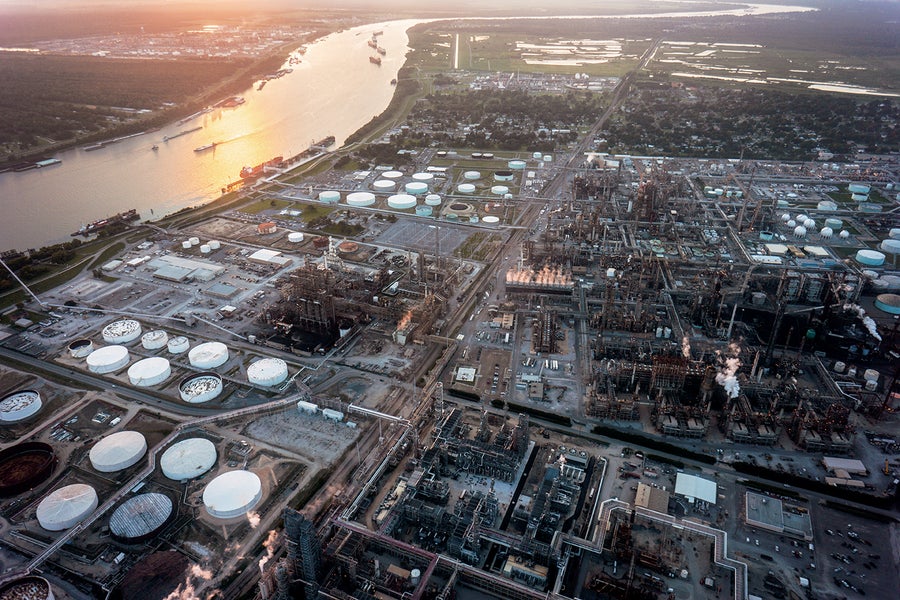
Chemical plants and factories dot the suburbs of the 137-kilometer stretch from New Orleans to Baton Rouge known as Cancer Alley.Giles Clarke/Getty ImagesContinue reading →
Studies show high doses could cause cancer in rats, but the regulators maintain that no evidence exists that ingesting the coloring causes cancer in humans.
Federal officials moved Wednesday to ban a controversial bright red dye used in drinks and snacks that has been linked to cancer in animals, a decision arriving decades after the coloring was removed from cosmetics.
The Food and Drug Administration’s action affects red dye No. 3, which was approved for permanent use in food and ingested drugs more than 50 years ago. The decision comes more than two years after advocates pressured the agency to ban the dye, which is used in bubblegum, candy and fruit cocktail, arguing that it is safer to use natural coloring derived from plants such as beets and red cabbage.
Studies have shown that high doses could cause cancer in rats, prompting the FDA to decide to remove the artificial dye. But the agency maintains that there is no evidence that ingesting the cherry-red coloring causes cancer in humans.
The FDA’s decision comes at a crucial time for food policy in the United States. Robert F. Kennedy Jr., whom President-elect Donald Trump picked to lead the nation’s health department, has been critical of some chemicals and ingredients found in food and drinks. Social media influencers and lawmakers in both parties are also increasingly scrutinizing food and drinks sold in grocery stores, while the FDA pleads for more money from Congress to devote to chemical safety.
Red dye No. 3 must be removed from food by mid-January 2027 and excised from ingested drugs the following year. The FDA says its decision to ban red dye No. 3 was based on a federal law called the Delaney Clause, which prohibits additives found to cause cancer in humans or animals at any dose.
“The Delaney Clause is clear; the FDA cannot authorize a food additive or color additive if it has been found to cause cancer in humans or animals,” Jim Jones, the FDA’s deputy commissioner for human foods, said in a statement. “Importantly, the way that … Red No. 3 causes cancer in male rats does not occur in humans.”
Opponents of red dye No. 3 — also known as erythrosine or FD&C Red No. 3 — have argued that the additive should have been banned decades ago, and scientists have long debated the safety of food additives. The nonprofit Center for Science in the Public Interest led a 2022 petition asking the agency to formally remove the dye from the list of approved color additives in foods.
The agency faced pressure from Democrats and Republicans to act on the additive, and the battle over red dye No. 3 highlighted criticism that the FDA does not move with sufficient urgency to remove potentially dangerous food ingredients. In response, agency officials have said they recently finalized a massive reorganization of the FDA’s food program, which includes an office dedicated to reviewing chemicals found in food.
October11, 2024 – Editor’s note: Duke Energy Indianalast week said they were going to extend the massive, extremely filthy Gibson Station by an additional five years. Meanwhile, lots of regional officials are steadfastly opposing cleaner, safer generation like wind and solar.
By Michael Hicks in the Indianapolis Star September 16, 2024. Michael J. Hicks is the director of the Center for Business and Economic Research and the George and Frances Ball distinguished professor of economics in the Miller College of Business at Ball State University.
The Indiana Economic Development Corp. turns 20 years old in early 2025. In 2005, Indiana had 104,854 businesses, 2.96 million jobs and 6.28 million people. In 2021, the most recent year for all these data, Indiana had 99,280 businesses, 3.23 million jobs and 6.81 million residents.
If the state had grown at the same pace as the rest of the nation, we would have 110,305 businesses, 3.23 million jobs and 7.05 million people. That leaves Indiana with a two-decade growth shortfall of more than 11,000 businesses, 151,000 jobs and 240,000 people.
Unfortunately, the truth about business attraction policies is even worse than this otherwise tragic data suggests. The IEDC was formed to attract primarily new manufacturing firms. Since its formation in 2005, Hoosier factory employment has declined by almost 55,000 jobs, or 10%. Indeed, since Indiana’s LEAP district was announced, the state has shed a further 14,000 factory jobs, while the nation as a whole added 166,000 manufacturing positions.
Over the past two decades, average real wages for manufacturing workers in Indiana dropped by a stunning 14.4%. Nationwide, they rose by just under 1%.
These stunning data cannot come as a surprise to state or local elected leaders, or to economic development board members. To be clear, this is broad policy failure in its purest, most unadulterated form. But, these dismal data do not reveal a failure of the Indiana Economic Development Corp. Rather, they indicate a failure of state economic growth priority.
Fundamentals of Indiana’s economy are poor
Economic development organizations at the local or state level do not create jobs, nor do they really attract businesses. At best, they act as a concierge for businesses already seeking to expand or relocate to Indiana. These organizations represent the region to new businesses, but they cannot make a place attractive to businesses — or, more importantly, people.
As a guy who studies these things, I believe there is good evidence that IEDC is consistently among the better state development organizations in the country. I’ve published work on the Regional Cities Initiative operated by IEDC and reviewed their operations a decade ago.
Still, the IEDC is tasked with representing a state with increasingly poor economic fundamentals. As bad as the last two decades have been, the future looks even worse. Again, this surely cannot come as a surprise to Hoosier elected officials, or those who sit on economic development boards. If so, they just aren’t paying attention.
For the first time in history, Indiana has entered what will be a long period of declining educational attainment. The real funding cuts to state universities are now more than 15 years old and have left us with a 10-year cohort of declining attendance and graduation. Even if we were to reverse the trend today, we are stuck with half a generation of declining educational attainment.
Prioritize skills and education
We’re doing little to reverse the trend. The inaction is particularly stark when compared to other poorly educated places, like Mississippi, where one-third more high school graduates attempt college each year than here in Indiana.
By Rebecca Thiele, September 6, 2024 in Indiana Public Media Editor’s Note: The Indiana Department of Environmental Managementonly cares whether an applicant crosses its “Ts” and dots its “Is” so it is hard to tell just what their response will be on a company that ignores the fact that they needed a permit to expand and did not even botch to ask. Probably depends on whether the principals provided campaign cash to the right people.Not sure their past violations will mean much toIDEM.
Tradebe Treatment and Recycling, LLC has asked the state’s permission to expand its operations. (Google Maps)
Residents of East Chicago’s Calumet neighborhood are concerned about a hazardous waste facility’s plans to expand. Attorneys representing the East Chicago Calumet Coalition–Community Advisory Group said the state isn’t doing enough to enforce environmental laws and keep residents safe.
Mark Templeton directs the Abrams Environmental Law Clinic at the University of Chicago Law School. He said Tradebe Treatment and Recycling, LLC has had hundreds of permit violations within the past five years — often the same ones. Things like open or leaking hazardous waste containers, improper labeling and unsafe storage.
Templeton said not only has the Indiana Department of Environmental Management failed to make sure Tradebe follows the law, it’s let the company do things without getting state approval first. In fact, he said Tradebe has already expanded its operations.
“IDEM is catching up with what the company had been doing in practice already. That’s not how environmental regulation is supposed to work,” Templeton said.
In the past, Tradebe has said problems that came out of the pandemic created a backlog of hazardous waste — forcing incinerators to hold on to it longer than what’s allowed.
Tradebe also recently asked to modify its air permit to accommodate a shredding machine it already has. Templeton said this machine can put out particle pollution — which can harm your heart and lungs.
Templeton also has concerns about how the company is using its thermal desorption units — equipment that’s supposed to use heat to remove toxic chemicals from material in the recycling process. He said Tradebe hasn’t properly proved that there’s no oxygen in the process — which means the company could be incinerating the waste instead, putting unknown hazardous chemicals into the air.
Resident Akeeshea Daniels co-chairs the East Chicago Calumet Coalition–Community Advisory Group. She said residents often aren’t told what goes on at facilities like Tradebe and local and state officials don’t seem to care. Meanwhile, people living nearby continue to suffer from things like asthma and cancer.
“They’re still letting people buy homes in this area, still letting people move into this area. These people have no clue what they’re moving into — and some of these people are young and they have young children,” Daniels said.
Among other things, the ECCC-CAG wants to have air monitors installed around Tradebe’s perimeter, for IDEM to respond within three hours of a report about odors or fumes coming from the facility, and for IDEM to set up a satellite office in East Chicago, Hammond or Whiting.
IDEM refused to make someone available for an interview and says that it might take previous violations into account when adjusting a company’s permit.
We must determine which uses of plastic remain essential; eliminate those that aren’t; and design new materials to replace still essential plastics.
Our romance with plastic commenced just over a century ago. For much of this history, plastic was thought harmless: An almost infinitely malleable material that could be manipulated to do miraculous things without danger to humans, wildlife or the environment.
Indeed, that belief still persists in some quarters. For example, a delegate from a major plastic producing country proclaimed at the recent UN plastic treaty negotiation in Ottawa (April 2024) that “plastic is inert.”
That assertion is simply and profoundly wrong. Thousands of studies using modern biochemical science definitively prove the opposite, with scientific certainty. Plastic is not inert. Instead, the chemicals that go into plastics can cause many harmful effects and plastic particles themselves, now unquestionably penetrating the most intimate tissues and fluids in our bodies, may contribute to that harm directly.
How could we have been so wrong? Multiple factors have hidden the truth. Seven are especially important:
Chemists and chemical engineers got better and better at mixing simple plastics with more and more chemicals to manipulate its material qualities. Do you want it softer, more malleable, better able to resist sunlight damage, etc.? Countless properties were altered to produce the wide varieties of plastic we have now. Today’s plastics are a veritable soup of chemical ingredients. All told, across all types of plastic, over 16,000 chemicals are known to be present. Very few of those plastic ingredients, or the whole soup, have been tested for safety.
No one thought carefully and systematically about the reality that plastic production unavoidably includes impurities, and these react with chemicals in the soup to form literally thousands of “non-intentionally added substances.” Among them are many hazardous chemicals, and also other chemicals that have not been characterized well-enough to even begin to understand their potential dangers.
No one worried initially that those chemicals might leach from the products and into the environment, or food in plastic packages. But even if they did, the assumption was that the amounts migrating would be so small as to be immaterial.
No one realized at the beginning that some of those chemicals would disrupt human and wildlife hormone signaling at infinitesimally low levels so that exposures caused by leaching could actually be quite hazardous, contributing to many human maladies including heart disease, cancers, infertility, and neurological, metabolic and immune disorders.
No one imagined that waste plastics, instead of being degraded by natural processes, would persist for decades or longer, breaking into smaller and smaller pieces that ultimately have invaded not just the entire biosphere but also our very bodies, in the most intimate places. And in addition to chemicals inherent in those pieces also come hitch-hiking chemicals the particles picked up somewhere in the environment they traversed enroute to our bodies.
No one foresaw, except in the wildest dreams of plastic producers, that production would expand exponentially so that by today it overwhelms our ability to manage the volumes that are produced.
Vast fortunes have accrued to companies and individuals in the plastic business. That has enabled serious efforts to oppose and undermine science demonstrating harmful effects of plastics. Too many examples show that companies hid data about the toxicity of their products until efforts by intrepid journalists and lawyers unearthed damning evidence in company files and memos, sometimes decades old. It makes you wonder: “Don’t the perpetrators have families whose futures they care about?”
Today, we know with confidence that the chemicals released by plastic manufacturing, use and disposal harm people, wildlife and the environment. We know they are ubiquitous. And we have considerable, growing evidence that micro and nano plastics now literally everywhere in the environment are likely to harm health also.
“Plastic is not inert. Instead, the chemicals that go into plastics can cause many harmful effects.”
Some uses of plastics are essential. We should be grateful for those. Yet it is scientifically untenable to look toward a future in which plastic production volumes triple by 2060—the plastic industry’s own projections—and imagine that future is remotely sustainable. Given the range of human maladies now traced to plastic chemicals, it is a recipe for societal suicide.
Many steps can and must be taken in response to this plastic tsunami. Overall, we should reduce production of plastic, simplify its chemistry, and remove hazardous materials from its ingredients. We must determine which uses of plastic remain essential; eliminate those that aren’t; and design new materials to replace still essential plastics.
Most important are efforts by synthetic chemists to use the scientific knowledge that has emerged about plastic hazards to design safer materials.
This article was originally published by Earth Action, a Swiss non-profit, in a report titled Stop the plastic avalanche in Switzerland and is republished here with permission.
StarPressEditor’s Note: The following is part of a class project originally initiated in the classroom of Ball State University professor Adam Kuban in fall 2021. Kuban continued the project this spring semester, challenging his students to find sustainability efforts in the Muncie area and pitch their ideas to Ron Wilkins, interim editor of The Star Press, Journal & Courier and Palladium-Item. This spring, stories related to health care will be featured.
Indiana lawmakers remain divided over what steps should be taken to regulate harmful chemicals in Hoosiers’ lives.
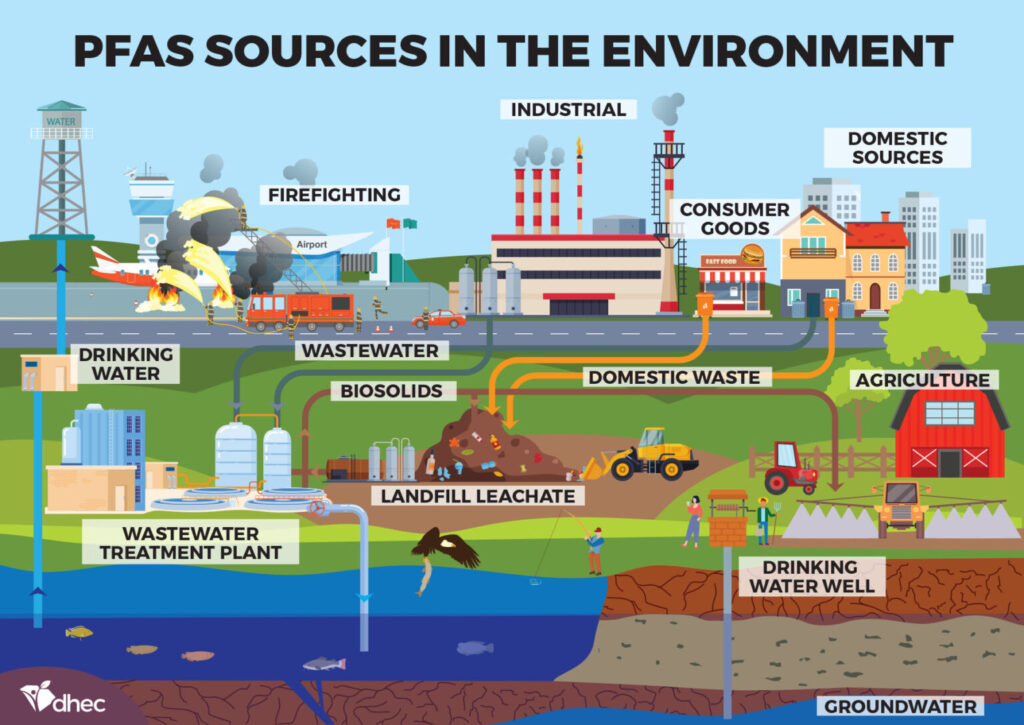
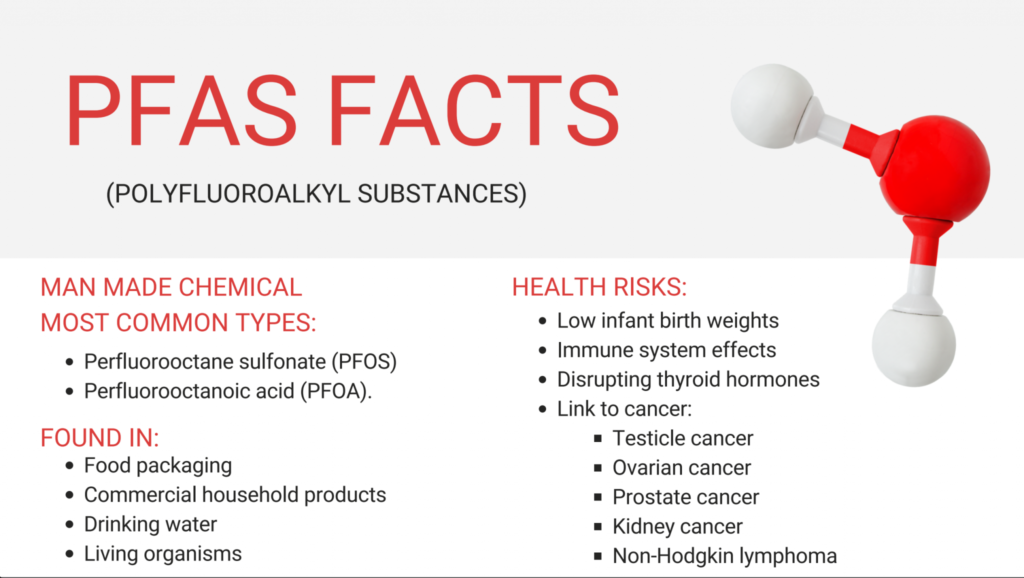
According to the National Institute of Environmental Health Science, per- and-polyfluoroalkyl substances, or PFAS, are a group of synthetic chemicals that have been shown to have harmful effects on humans and animals. These chemicals became prominent in the 1950s and are found in drinking water as well as other everyday products including non-stick skillets, cosmetic products, waterproof clothing and more.
PFAS have gained public attention in recent years and have been increasingly written about.
In a peer-reviewed article from “Environmental Toxicology Chemistry,” it was found that most published journal articles currently attribute various health issues to PFAS. According to the article, many studies connect PFAS with problems relating to immune function, thyroid function, liver disease and cancer.
The Environmental Protection Agency also considered these chemicals potentially dangerous, warning that these chemicals cause health effects.
Several states, including Michigan and Wisconsin, have enacted drinking water regulations for PFAS chemicals, but Indiana has not.
Rep. Ryan Dvorak (D-South Bend) attempted to pass House Bill 1085, which would have required the Indiana Department of Health to establish state maximum levels for PFAS in water provided by public water systems.
That bill died in committee after failing to advance from the Committee on Environmental Affairs.
While Dvorak has been unsuccessful in passing legislation addressing PFAS chemicals, he says that the attention to PFAS encouraged the Indiana Department of Environmental Management to create a program for testing water supplies across the state. This data is available to the public but has not led to regulation of the chemicals yet.
“The problem is, we know which water systems have PFAS and are sending them into people’s homes, but nothing is being done about them,” Dvorak said. “I’m sure, though, the water systems in those municipalities are trying to figure out ways that they can change it, but there’s no penalties, and the water can still go into people’s homes.”
Dvorak said that part of the problem is that some legislators feel that there is not enough information on PFAS chemicals to justify regulation at the state level. Recently, there have also been changing definitions from the federal government focusing on what would be safe levels should be.
In a peer-reviewed journal article published in “International Journal of Environmental Research and Public Health” that reviewed differing regulations, it was found that political, social, economic, scientific and practical issues all impact whether PFAS regulation will occur.
The article discusses U.S. Senate Bill 1507 from the 2019 legislative session, which, if passed, would have, “Authorized grants for states to address ‘emerging contaminants’ in drinking water, including PFAS; to direct the U.S. Geological Survey to set PFAS concentration standards in groundwater; to direct the EPA to study, monitor and regulate PFAS in drinking water; and to establish a multiagency initiative to study emerging contaminants, would be $715 million between 2020 and 2024.”
The article notes these high costs seem to impact the decision to regulate.
There are also interest groups that oppose certain PFAS regulations.
Indiana House Bill 1399 recently gained attention because it would have changed the definition of PFAS chemicals to allow for certain products to continue to be manufactured without being labeled as PFAS chemicals. While this bill originally died, there was a last-minute attempted revival. If it had passed, certain chemicals including polymers and gases, which are considered harmful in other states, would have no longer been considered dangerous in Indiana and would not have been recognized as PFAS.
Proponents of Bill 1399 argued that certain essential products contain PFAS that should not be grouped in with other PFAS-containing products.
November 28, 2023-By Ryan Van Velzer, Louisville Public Media. Editor’s Note: It has been known for a little over a year now that Henderson, Kentucky was also experiencing problems with these chemicals that are deleterious to our health and last forever.
In the latest round of testing for forever chemicals, the Kentucky Division of Water discovered high rates in two communities. Now, municipal leaders are working with state officials to try and fix it.
The city of Lewisport, Kentucky, is a seven-time winner of the Best Tasting Water in Kentucky. This spring, city leaders discovered another top ranking of its water, but one they would be loath to promote.
The Kentucky Division of Water collected samples from the Lewisport water plant as part of the latest round of statewide testing for forever chemicals. The city’s drinking water tested positive for three compounds among the tens of thousands that belong to the family of chemicals, also known as per-and polyfluoroalkyl substances (PFAS).
Forever chemicals are used for all sorts of stuff: non-stick cookware, stain-resistant carpets and waterproof clothing. They’re now present in Kentucky’s soil, water, airand in fish tissue. And they’ve been linked to cancer and several other health problems — even in small quantities.
Over the last five years, Kentucky’s Department for Environmental Protection (DEP) has tested 91% of the state’s water treatment plants for PFAS, according to an LPM analysis.
They’ve found detectable levels of forever chemicals in the drinking water at 44% of the water treatment plants they tested — 86 plants in total.
In the latest round of data from 2023, the state found two places with PFAS levels above proposed federal standards, or maximum contaminant levels.
Lewisport’s drinking water showed levels of PFOS three times higher than proposed standards.
Marshall County’s North Marshall Water District showed levels of PFOA nearly three times higher than proposed standards.
DEP Commissioner Tony Hatton has been the architect for the initiative since its inception. He helped to set up a state lab where researchers could conduct their own testing.
“We didn’t collect the data for the sake of collecting data. We have started using that data to go to where we see specific issues, and start assisting, trying to get ahead of it,” Hatton said.
The state’s first round of testing in 2019 found PFAS chemicals in about half the drinking water systems in Kentucky including Louisville. Researchers discovered the highest levels in South Shore, Kentucky, which has since switched its water source as an interim fix and is finalizing a long term solution, Hatton said.
The Department for Environmental Protection is now working with the communities of Lewisport and Marshall County to find their own remedies.
A nationwide problem
Forever chemicals have been discovered in more than 3,000 locations across all 50 states, according to Environmental Working Group data from August. Kentucky Rural Water Association Director Scott Young agrees.
“PFAS is something that every water utility and community is going to have to at some point, address or deal with, whether they have it or not,” he said. “From a consumer standpoint, they need to know what’s in the water, they need to know what’s being done to address it.”
A slide in a power point presentation given to a state legislative committee in June 2023. It shows public community water treatment plants tested for PFAS chemicals.
At this point, there are basically two remedies for treating water, reverse osmosis and granular activated carbon. They’re different ways of stripping water of unwanted particles. Neither are cheap, each has its own drawbacks and all of these costs are likely to be paid for by ratepayers and utilities that had nothing to do with the contamination, Young said.
“The public utility is at a significant disadvantage, because it’s being tasked with cleaning up the drinking water supply from another industry,” he said. “And they’re also being asked to do it at the expense of their customers.”
Rural water utilities with fewer customers and smaller tax bases are at a particular disadvantage.
The court found that young people have a constitutional right to a healthful environment and that the state must consider potential climate damage when approving projects.
A group of young people in Montana won a landmark lawsuit on Monday when a judge ruled that the state’s failure to consider climate change when approving fossil fuel projects was unconstitutional.
The decision in the suit, Held v. Montana, coming during a summer of record heat and deadly wildfires, marks a victory in the expanding fight against government support for oil, gas and coal, the burning of which has rapidly warmed the planet.
“As fires rage in the West, fueled by fossil fuel pollution, today’s ruling in Montana is a game-changer that marks a turning point in this generation’s efforts to save the planet from the devastating effects of human-caused climate chaos,” said Julia Olson, the founder of Our Children’s Trust, a legal nonprofit group that brought the case on behalf of the young people. “This is a huge win for Montana, for youth, for democracy, and for our climate. More rulings like this will certainly come.”
The ruling means that Montana, a major coal and gas producing state that gets one-third of its energy by burning coal, must consider climate change when deciding whether to approve or renew fossil fuel projects.
The Montana attorney general’s office said the state would appeal, which would send the case to the state Supreme Court.
“This ruling is absurd, but not surprising from a judge who let the plaintiffs’ attorneys put on a weeklong taxpayer-funded publicity stunt that was supposed to be a trial,” Emily Flower, a spokeswoman for the attorney general, Austin Knudsen, said in a statement. “Montanans can’t be blamed for changing the climate.”
June 8, 2023 – By John Blair, valleywatch.net editor.
This ia a map from IQAir showing monitoring stations across the globe. Valley Watch and SW Indiana Citizens for Quality of Life have a monitoring network with IQAir called “Ohio Valley Safe Air” that keeps continuous records of fine particle pollution around the Kentucky/Indiana border. You can access the site at IQAir.com/map. Our monitoring network was funded by a grant from a settlement with American Electric Power and numerous environmental, and consumer groups in 2020.
Knowing that even slight elevation in fine particles can have serious impacts on human health, I cannot help but have great compassion for those people who are having to live in smoke filled air that are inundating the eastern half of the USA.
It is absolutely true that no one should breathe air that is so grossly polluted but then what can you do when the pollution is so widespread and so extremely high? At a minimum, the use of N95 masks should be worn but, of course, masks of any sort have become a rallying call for radical right-wingers who see them as a restriction on freedom and an assault on their manhood.
But those I really feel sorry for are the kids whose misinformed parents will claim that “what doesn’t kill you will make you stronger.”
Reporting on this current disaster has barely linked the smoke filled skies with climate change that is the result of ever increasing levels of carbon dioxide (CO2) in the earth’s atmosphere from the burning of coal and other fossil fuels across the world. Resulting drought causes massive forest to dry out and become susceptible to fire. Then in a feedback loop, as those forests burn, they release even greater amounts of CO2 to the atmosphere which in turn raises temps and dryness in a kind of morbid loop that makes things worse over time.
Wildfires in North America and Australia have recently resulted in dire health situations for millions of people. Smoke is made up mainly of fine particles that when breathed in can cause a wide array of respiratory and circulatory issues like asthma, heart attacks, stroke, COPD, and even cancer when those particles pass from the air into the lungs and ultimately the blood stream of humans. Smoke like currently experienced in the northeastern USA can have both immediate (acute) and long term (chronic) health problems for those exposed.
It is important for personal protection to avoid smoke from any source so please do what you have to do to avoid breathing crap filled air. If you can see it, taste it or smell it, do not breathe it.
New proposed standards for coal and new natural gas fired power plants would avoid more than 600 million metric tons of CO2 pollution, while also preventing 300,000 asthma attacks and 1,300 premature deaths in 2030 alone.
WASHINGTON – Today, the U.S. Environmental Protection Agency (EPA) proposed new carbon pollution standards for coal and natural gas-fired power plants that will protect public health, reduce harmful pollutants and deliver up to $85 billion in climate and public health benefits over the next two decades.
The proposal for coal and new natural gas power plants would avoid up to 617 million metric tons of total carbon dioxide (CO2) through 2042, which is equivalent to reducing the annual emissions of 137 million passenger vehicles, roughly half the cars in the United States. Through 2042, EPA estimates the net climate and health benefits of the standards on new gas and existing coal-fired power plants are up to $85 billion.
The proposals would also result in cutting tens of thousands of tons of particulate matter (PM2.5), sulfur dioxide, and nitrogen oxide, harmful air pollutants that are known to endanger people’s health, especially in communities that for too long have disproportionally shouldered the burden of high pollution and environmental injustice. In 2030 alone, the proposed standards would prevent:
approximately 1,300 premature deaths;
more than 800 hospital and emergency room visits;
more than 300,000 cases of asthma attacks;
38,000 school absence days;
66,000 lost workdays.
“By proposing new standards for fossil fuel-fired power plants, EPA is delivering on its mission to reduce harmful pollution that threatens people’s health and wellbeing,” said EPA Administrator Michael S. Regan. “EPA’s proposal relies on proven, readily available technologies to limit carbon pollution and seizes the momentum already underway in the power sector to move toward a cleaner future. Alongside historic investment taking place across America in clean energy manufacturing and deployment, these proposals will help deliver tremendous benefits to the American people—cutting climate pollution and other harmful pollutants, protecting people’s health, and driving American innovation.”
Consistent with EPA’s traditional approach to establishing pollution standards under the Clean Air Act, the proposed limits and guidelines would require ambitious reductions in carbon pollution based on proven and cost-effective control technologies that can be applied directly to power plants. They also provide owners and operators of power plants with ample lead time and substantial compliance flexibilities, allowing power companies and grid operators to make sound long-term planning and investment decisions, and supporting the power sector’s ability to continue delivering reliable and affordable electricity. EPA’s analysis found that power companies can implement the standards with a negligible impact on electricity prices, well within the range of historical fluctuations.
Together with other recent EPA actions to address health-harming pollution from the power sector, today’s proposed rule delivers on the Administration’s commitment to reduce pollution from the power sector while providing long-term regulatory certainty and operational flexibility. In addition, EPA and the Department of Energy recently signed a memorandum of understanding to support grid reliability and resiliency at every stage as the agency advances efforts to reduce pollution, protect public health, and deliver environmental and economic benefits for all.
President Biden’s policy agenda has already kicked off a clean energy and manufacturing boom across the country and is adding momentum for technologies like carbon capture and storage (CCS) and clean hydrogen. Today, thanks to this progress, the power sector has a broad set of tools to deploy clean, affordable energy, take advantage of ready-to-go advanced pollution reduction technologies, create and retain good-paying union jobs, and reduce energy costs for families and businesses. EPA took account of this significant technologic and economic progress in developing the proposed rule and anticipates that power companies will take advantage of these tools, and trends, when determining how to most cost-effectively meet the proposed standards and emission guidelines.
The technology-based standards EPA is proposing include:
April 21, 2023 – by John Blair, Valley Watch President and webpage editor. John Blair was one of the founding members of Valley Watch, whose purpose is “to protect the public health and environment of the lower Ohio River valley.” This is his perspective on environmental health progress since the first EarthDay in 1970. April 22 marks the 53rd anniversary of EarthDay. At a ripe young 23, I went to Butler University and watched a film (No Blade of Grass) that forever changed my life. I became an “environmentalist.” My first action was to stop throwing cigarette butts out of my car window.
I gathered as much information as possible about pollution, read The Limits to Growth and celebrated the passage of the Clean Water and Clean Air Acts, the Endangered Species Act, the Safe Drinking Water Act and, in 1976 the passage of the Toxic Substance Control Act. I also ran for Congress in 1976 and two of my main issues were high utility bills and seeking to stop a stupid idea to build another Wabash Canal. I lost the election but won the issue of the Canal with the help of Indiana Senator, Richard Lugar and common sense.
Winning that issue did embolden me and when I heard that the Feds were looking to build a nuclear waste dump in the Hoosier National Forest, I was driven to action, forming a rag tag group called the Nuclear Waste Action Committee. My first contact in that fight was the Evansville Chamber of Commerce, whom I figured would be readily on board since such a facility would not serve us well in attracting any sort of clean new business. They balked and I would soon find that they were not interested in quality of life issues at all, just jobs, often dangerous. NWAC played hardball and kept the nuclear waste site out of Indiana.
Around that same time, a massive buildout of coal fired power plants was taking place in the region as well as a huge Marble Hill nuclear plant that was proposed and being built on our drinking water source, the Ohio River, near Madison. Then, in the late 1970s three giant “synthetic fuel” plants, designed to convert local coal into other forms of coal were proposed just across the River between Owensboro and Henderson in Kentucky.
We were truly under assault from a variety of huge new pollution sources if they were successful.
Then, four things happened. First, I was fortunate to win a Pulitzer Prize for News Photography in 1978. After that, I knew I could go elsewhere and find a good job in my chosen profession, photojournalism. But I chose instead to stay in my adopted home of Evansville and fight as best I could to stop the onslaught of new pollution sources that seemed to be proposed nearly monthly, mostly new coal plants in one form or another.
Together with my friend and colleague. Tom Zeller, a geology instructor at University of Southern Indiana, we went on a massive campaign to alter the region’s future.
Concurrently, we did three things together to accomplish just that. We formed three different groups to fight for public health and the environment. The first was a professional group called Synfuel Inquiry. It consisted of mostly academics in a wide array of sciences, a few medical doctors, and a few like minded regional attorneys. Its purpose was to redefine the meaning of Synfuels and show the world that it was economically dumb and environmentally hazardous to spend huge sums of Federal money that would serve no useful purpose.
Second, we decided to start a monthly newsletter which we quickly turned into a newspaper called the Ohio Valley Environment or affectionately, the OVE. We freely distributed the OVE throughout SW Indiana, Bloomington, Louisville and Madison regions at the tune of 17,000 a month. We presented balanced environmental health news on most pages but had a hard hitting editorial page that was way before its time. Unlike Synfuel Inquiry and Valley Watch which came a bit later, the OVE was a “for profit” venture that was actually a labor of lOVE.
We covered stories on toxic waste like the “Valley of the Drums” in Louisville, really thorough coverage of Marble Hill as well as the developments in synfuels and, of course, the proliferation of coal plants and mining in the tri-state. We also ran exclusive stories and interviews with a variety of national figures and studies that apparently were “not worthy” of conventional news coverage.
Those included interviews with the Chair of the Tennessee Valley Authority, David Freemen, the President of the US Synthetic Fuel Corporation, an upstart funded by $88 billion of Federal (taxpayer) money. And, newsmakers like Ralph Nader, Richard Harris (the first director of the Office of Surface Mining), Joel Deckard, the 8th District Congressman and Ernest Sternglass, one of the principal scientists in the Manhattan Project which developed the first nuclear weapons.
Our first expose was about a small socially irresponsible company that operated in Rockport called Barmet. They also had facilities in Livia, KY and Bedford, IN all of which were filthy and dangerous for the people who lived nearby. The plant manager for Rockport was a former Air Force Colonel named John Grunigen. He said something that forever changed the way I would see things.
In my interview with him, I asked him about why he was allowed to operate such a dirty plant without industrial zoning. He said, “Well, young man. Laws are made by the weak to hinder the strong.” I was stunned.
The only thing I had ever heard that came even close to being so anti-democratic was something that a local attorney had said in 1977 as a member of a Chamber committee called the “Task Force For Reasonable Clean Air Standards.” On a local public affairs program addressing the very first health based standards for criteria pollutants like ozone and lead, he seriously said, “The problem with these standards is that they are designed to protect the most sensitive people (meaning those who get sick from dirty air). We will just have to develop some sort of mask for those people to wear.” At the time, there was no viral pandemic that was killing people, he was simply saying in the best “crony capitalist” jargon that economic wealth was more important than public health. And, it is OK to stigmatize some people.
The OVE lasted for three solid years, paid for with affordable advertising and a lot of volunteer effort from writers, artists and distributors but it never really turned a profit. It did have residual impact since it forced the traditional media into covering the topics of environmental health that previously were being ignored or dismissed. That impact lasted at least a decade.
Third, we formed Valley Watch whose purpose was and still is the “protection of public health and the environment of the lower Ohio River Valley.” Unlike the other ventures, Valley Watch was designed to last and be a force for the future in defining the economic course for the region. We would oppose pollution that released toxic chemicals and the facilities that were proposed that would do that.In that effort, we won numerous battles. Barmet was finally forced to close. We beat back all three giant synfuel plants. Marble Hill was forced to shut down before it was completed. A number of coal plants were stopped before they could break ground. Con Agra was stopped from building an ozone producing soybean plant. Yet, another proposal to build a nuclear waste storage site in Kentucky was defeated. Evansville’s own Bristol Myers Squibb was forced to quit using a horrible cancer causing chemical called ethylene oxide to sterilize nipples for their infant formula. Public knowledge about the harmful health impacts of toxic chemicals in the regional environment was heightened.
We played a significant role in the passage and implementation of Indiana’s solid waste laws and rules which went far in making the disposal of regional waste safer for future generations.
In the twenty-first century, along with colleagues, we stopped several proposed coal plants and the stupid Indiana Gasification proposal in Rockport from being built. We also successfully fought a giant polluting fertilizer in Rockport, too.
We didn’t always win. Our first loss had begun construction prior to our existence-the Rockport power plant.
Also, even though we beat back Peabody Energy’s proposal for a massive new coal plant in Muhlenberg County, KY called Thoroughbred, we lost out fight to keep Peabody’s Prairie State plant out of southern Illinois. Now, it is one of the world’s largest CO2 and SO2 emitters.
These battles were long and hard and stressed our entire staff of unpaid volunteers to the limit at times. Marble Hill, Thoroughbred and Indiana Gasification all consumed eight years of our effort. Others, as much as five. But we learned the lesson that if you cannot match money and other resources you MUST rely on perseverance and dedication if you expect to win in the end.
Our most recent calling is another ridiculous project proposed for Dale, IN, a bucolic community in norther Spencer County. In 2010, a company calling itself, Clean Coal Refining Company sought to build a giant plant to convert coal to diesel fuel and naphtha in Vermillion County, north of Terre Haute. At the time, coal was still king in Indiana and Federal dollars were once again flowing to the dirty fuel. The site was the former US Army nerve gas storage site which consumed hundreds of acres on the banks of the Wabash River.
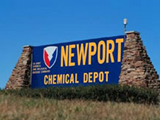
Clean Coal Refineing Corp.’s first shot was at the former US Army’s Chemical Depot located in Newport, IN. Authorities did not renew options after six years because they had had enough “empty promises.”
Vermillion County had been given the land by the Army once the nerve gas was removed and presumably destroyed and they developed a “Redevelopment Commission” to market a large new industrial site. Clean Coal Refining jumped at the chance to get a site, secure and fairly isolated, to build their experimental plant they said would cost $2.5 Billion and create 200 permanent jobs.
The Commission, recently named, Vermillion Rise jumped at the chance to lease 1,500 acres to Clean Coal Refining and gave them three year options which allowed time to design, secure financing, government loan guarantees and find a market for their products. At the end of the three year options, nothing had happened so the Commission gave them an additional three year option. Valley Watch followed their lack of progress but did not see it as much of a threat since nothing was happening.
Sometime in the middle of the last decade, Vermillion Rise found that the name Clean Coal Refining was a turn-off for other prospects who might wish to locate there. A brand change was required. Riverview Energy arose as a euphemism since it sat on the banks of the Wabash River. Like lipstick on a hog, that was not enough to make the plant viable. By 2016, and still no progress for Riverview, Vermillion said “enough” and told Riverview to pack their bags because the options would not be renewed.
New research shows that improving air quality may lead to better brain health in older age. Smith Collection/Gado/Getty Images
Smith Collection/Gado/Getty Images
Exposure to higher levels of air pollution in late life has associations with dementia.
Results from studies linking air pollution to age-related decline in cognitive function have been mixed.
A new study involving women aged 74 to 92 years shows that living in locations with greater improvements in air quality in late life was associated with slower rates of cognitive decline.
These results suggest that reducing air pollution can positively affect brain health.
A new study involving women aged 74 to 92 years shows that residing in locations with a greater reduction in air pollution levels in late life had associations with a slower decline in cognitive function.
Cognitive agingTrusted Source refers to a decline in cognitive function that typically occurs with aging. Previous studies examining the association between higher air pollution levels and cognitive decline have yielded mixed results.
The results of this study add to data suggesting an adverse impact of outdoor air pollution on cognitive aging.
The study’s lead author, Dr. Diana Younan, former Senior Research Associate at USC Keck School of Medicine, Los Angeles, told Medical News Today, “We found women living in locations with greater improvement in air quality tended to have a slower decline in cognitive function, which was equivalent to being about 1 or 1.5 years younger.”
“We hope the new findings from our study tell the policymakers that the health benefits of improved air quality likely include maintaining brain health in older people and that it is worth the continuing efforts to enforce air quality standards and provide more clear air to all.”
– Dr. Younan
This study, which researchers at the University of South California led, appears in PLOS Medicine.
Air quality improvements
The adverse effects of air pollution on human health are well-recognized. Studies have shown that lower air pollutant levels have links to a longer lifespanand a decline in the prevalence of respiratory illnesses.
Previous research had shown that exposure to air pollution had associations with an increased risk of dementia. However, data showing a correlation between higher pollution levels and cognitive decline that normally occurs with aging have been inconsistent.
The Environmental Protection Agency (EPA) established the National Ambient Air Quality Standards in 1970 to safeguard human health. These standards have placed a cap on the permissible levels of six air pollutants.
The subsequent adoption of policies to restrict air pollution has resulted in a gradual decline in air pollution levels over the past 50 years in the United States.
“Scientists have known that improved air quality extends life expectancy in the elderly, saves lives in adults, promotes lung growth, reduces the risk of asthma in kids, and increases the birth weights in newborns. In this study, we asked a big question: do the public health benefits resulting from improving air quality in the U.S. help older Americans maintain their brain health?” Dr. Younan noted.
Estimating air pollution levels
The present study consisted of 2,232 women aged 74–92 years enrolled in the Women’s Health Initiative Memory Study-Epidemiology of Cognitive Health Outcomes study between 2008 and 2012.
The study comprised a geographically diverse group of participants residing in the 48 contiguous U.S. The team did not include individuals with dementia at the time of enrollment in the research.
The researchers administered telephone-based annual assessments to the participants to measure general cognitive function. Besides the battery of tests to assess general cognitive function, the participants also received a test to assess episodic memory specifically. Episodic memory is the ability to recall personal experiences and past events, and deficits in this faculty are one of the early signsTrusted Source of Alzheimer’s disease.
The researchers then estimated improvements in air quality for each participant over the 10-year period before their study enrollment. According to the residential address of the participants during this timeframe, the researchers estimated the participant’s annual exposure to air pollution with the help of models and EPA monitoring data.
Specifically, the team estimated the participant’s exposure to nitrogen dioxide and fine particulate matter or PM2.5, which comprises air pollutants with a diameter of 2.5 micrometers and smaller.
The team estimated air quality improvements by calculating the difference between the 3-year average air pollution exposure immediately before enrollment and 10 years before the onset of their participation.
December 2, 2021 -by TheJuiceMedia on YouTube. Editor’s note: Valley Watch was one of the very first organizations to expose the lies of carbon capture and sequestration. The real CCS is leaving the coal and oil in the ground, as nature intended.